
Clinical Applications of Psychology MSc
Postgraduate
- Start date
- –
- Study mode
- –
- Course length
- –
- UCAS Code
- –

Interested in a different start date?
Online course
Course overview
Discover how psychological theory and research are applied in clinical settings to support mental health and wellbeing. The Clinical Applications of Psychology MSc/PGDip/PGCert at Birmingham Newman University is a flexible, postgraduate programme designed for psychology graduates who want to deepen their understanding of clinical practice. Whether you are working as an assistant psychologist, support worker or preparing for doctoral training, this course offers a strong academic and practical foundation to help you take the next step. While not accredited by the British Psychological Society (BPS), it aligns with key areas of clinical psychology and supports progression into applied roles or further study.
This course can be completed between 2-4 years.
What does this course cover?
What You’ll Study and How You’ll Learn. You will explore topics including adult and child mental health, neuropsychology, therapy approaches, professional ethics and diversity. Research skills are developed throughout, with a focus on applying evidence to clinical decision-making. The course is delivered primarily online, with one in-person induction and weekly live seminars to support your learning. Modules are taught through a blend of asynchronous content and interactive sessions, helping you balance study with professional commitments. All assessments are coursework-based and reflect tasks relevant to clinical and academic roles.
Why study this course
Studying the Clinical Applications of Psychology MSc/PGDip/PGCert at Birmingham Newman University offers a flexible and applied route into postgraduate psychological training. Designed for graduates working in clinically relevant roles, the course helps you build the academic and practical skills needed to make informed and compassionate decisions in complex environments. With a strong emphasis on ethical awareness, reflective thinking and applied learning, the programme supports your development as a confident and capable practitioner in mental health and psychological services.
Explore Clinical Psychology and Applied Research
You will study a range of clinically relevant topics, including adult and child mental health, psychotherapy, neuropsychology, ethics and diversity, as well as clinical research methods. Modules are delivered through a combination of asynchronous online learning and live seminars, supported by coursework-based assessments such as case studies, reports, portfolios and proposals. The programme culminates in an independent dissertation, designed to produce a journal-style article, giving you the opportunity to demonstrate your research skills and academic development.
Supportive and Professional Learning
At Birmingham Newman University, you will be part of a supportive and inclusive learning community, even in an online setting. The course is delivered by experienced academics and practitioners who understand the demands of clinical training. Weekly live sessions, discussion forums and personalised tutor support ensure that you stay connected and engaged throughout your studies. With no examinations and a strong emphasis on applied learning, the programme is designed to be both academically rigorous and personally manageable.
Assessment
Assessment is designed to support your development into a confident and capable postgraduate learner. You will complete coursework-based tasks including case study analyses, reflective portfolios, research proposals and applied reports. These assessments help you apply psychological theory to real-world scenarios, develop critical reasoning and build professional judgement. You will receive regular feedback and academic guidance to support your progress and help you grow as a reflective and independent thinker.
Got a question you’d like to ask?
Entry requirements
We welcome students from all backgrounds and accept a wide range of qualifications. If yours aren’t listed, don’t worry – our Admissions Team can help you explore your options. See full entry requirements.
A relevant honours degree, 2:2 or above in Psychology conferring GBC from the BPS. Applicants will also be expected to demonstrate relevant work experience as part of their application.
If you are in receipt of overseas qualifications and have no evidence of UK study you may be required to demonstrate your English proficiency through a Secure English Language Test (SELT) such as IELTS.
The Admissions team will provide further details within your offer.
Consideration will be given to applicants with lower grade in qualifications (e.g. a 3rd class degree or non-honours degree) who have a relevant range of post study professional experience. Professional experience will be considered by the programme leader in conjunction with the quality office on an individual basis.
Please contact Admissions if you have any questions.
Course fees & funding
Fees
All fees are shown in GBP (£).
The tuition fee for the 2026/27 academic year is: £3,750.
Fees for the 2027/28 academic year can be found on our Student Finance pages and choosing your degree type.
Please note: If this course includes a Foundation Year, the fees shown above apply to the Foundation Year only. Fees for subsequent years will be charged at the standard undergraduate full-time fee.
Funding
Find out what funding and support might be available to you through Student Finance and Student Success.
Additional costs
The University will review tuition fees and increase fees in line with any inflationary uplift as determined by the UK Government, if permitted by law or government policy, in subsequent years of your course. It is anticipated that such increases would be linked to RPI (the Retail Price Index excluding mortgage interest payments).
Find out about extra costs, timetable details, and how course modules may change through additional course information.
Where will you study?
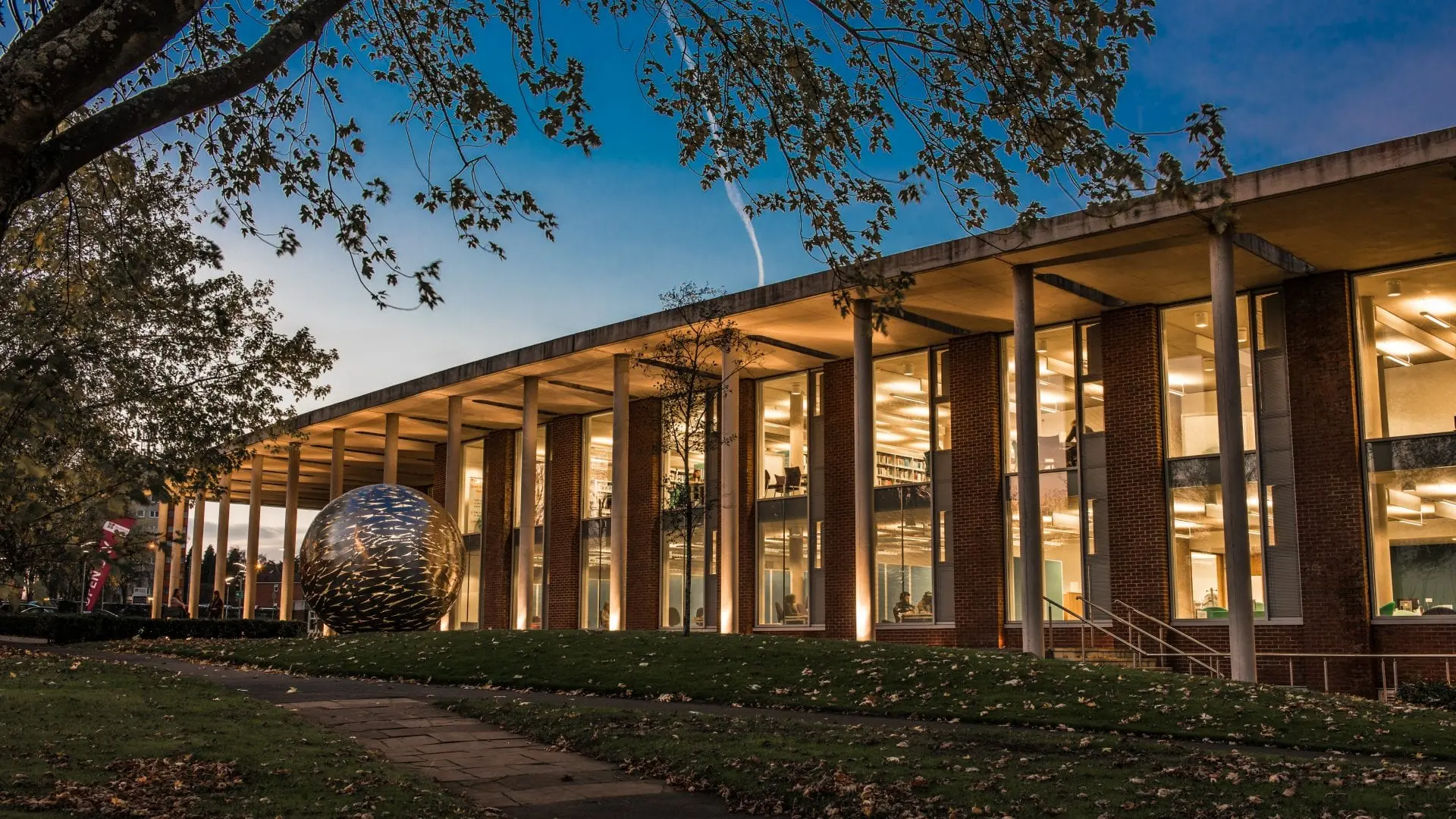
Our campus
Take a tour of our campus and view some of the facilities we have to offer.
Accreditations and exemptions
This programme is academically rigorous and professionally relevant, preparing you for careers that require psychological insight, ethical awareness and applied research skills. Although it is not accredited by the British Psychological Society (BPS) and does not provide Graduate Basis for Chartered Membership (GBC), it reflects key areas of clinical psychology practice in the UK. Many graduates go on to secure roles such as assistant psychologist or research assistant and successfully progress to doctoral-level training. You will graduate with the knowledge, experience and confidence to take the next step in your professional journey.
What careers can I consider
Graduates of this programme are well-prepared for roles in mental health, education, research or psychological support services. You may choose to work as an assistant psychologist, research assistant or in other clinically relevant roles. The course also supports progression into doctoral-level training, including clinical psychology, counselling psychology or related fields. You will be equipped to contribute confidently to multidisciplinary teams and apply psychological knowledge in real-world contexts. Support from Birmingham Newman University’s Careers and Employability Service includes mentoring, networking opportunities and guidance on further study or employment.
Courses we think you'll also like

Psychology (Conversion) MSc
- Start date:
- Various
- Study Mode:
- Part-time
- Length:
- 3 years

Psychology (Conversion) MSc
- Start date:
- Various
- Study Mode:
- Full-time
- Length:
- 1 years

Psychology and Childhood Studies (with Foundation Year) BSc (Hons)
- Start date:
- Various
- UCAS Code:
- C802
- Study Mode:
- Full-time
- Length:
- 4 years
Psychology and Childhood Studies BSc (Hons)
- Start date:
- Various
- UCAS Code:
- C801
- Study Mode:
- Full-time
- Length:
- 3 years
Student life & support
Student life & support at Birmingham Newman brings together the services, facilities and guidance that help students feel supported and succeed at every stage of their journey.
From academic skills, wellbeing and disability support to student finance, cost‑of‑living help, accommodation and campus life, we support students both inside and outside the classroom – so they can make the most of their time at university and beyond.
Life in Birmingham
Birmingham is one of the UK’s largest and most diverse cities, offering a vibrant and welcoming environment for students. From world-class shopping and a thriving food scene to cultural attractions and green spaces, there’s always something to explore.
The city is also one of the most affordable places to study in the UK, helping you make the most of your student budget. With excellent transport links, you can easily travel across the UK, including quick connections to London and other major cities.
Whether you’re looking for nightlife, live events, or quiet places to relax, Birmingham has something for everyone.
Check out our blog/news/events

Superb Teaching Earns Second Successive The Times And Sunday Times University Of The Year Award for Birmingham Newman
Birmingham Newman University is the 2027 The Times and Sunday Times University of the Year…
Birmingham Newman Soars to 35th Place as Fastest Rising University in The Guardian University Guide 2027
Birmingham Newman University is the fastest riser in this year’s Guardian University Guide, with a…
Teaching Excellence Powers Birmingham Newman Rise in Daily Mail University Rankings
Birmingham Newman University is the UK’s Number 1 university for teaching excellence, student experience and…

University shortlisted for national social mobility award
Birmingham Newman has been shortlisted for University of the Year in the UK Social Mobility Awards…

Birmingham Newman University: the new UK leader for student satisfaction in the National Student Survey
Birmingham Newman is the Number 1 university in the UK for overall student positivity –…
Book an open day
Find out about our next open day. Book now to secure your place.