BA Counselling Studies (Top-Up)

Foundation

Start date
Study mode
Course length
UCAS Code

BA Counselling Studies (Top-Up)

Course Description

The Counselling Studies BA (Hons) Top-Up award is a level 6 course designed to build upon previous counselling training or enhance knowledge and understanding of the counselling profession for those who have studied an aligned subject. The programme provides a deeper theoretical base for those who have an interest in applying counselling theory within a variety of practice contexts. The Top-Up programme will also equip students with research knowledge and skills.

What does this course cover?
This is a part-time programme running across two academic years. During the first year, students study a year-long research methods module and two additional modules (one per semester). The compulsory research methods module is designed to assist students in developing the research skills and understanding necessary for them to embark on a dissertation in counselling. In the second year, students study one module (in either semester 1 or 2) and a year-long dissertation. As part of the dissertation, students design, plan and execute EITHER an in-depth empirical research project OR a literature review with systematic methodology and narrative synthesis: this enables them to explore their own specific area of interest

The selection of optional modules (reviewed on annual basis) includes: Therapeutic approaches to supporting children and families; Mindfulness based approaches to Wellbeing; Bereavement and loss; Coaching and mentoring; Applied CBT; Working with Addictions. These module options enable students to select an area of interest or make module choices to support their career aspirations.

How will I be assessed?
Learning outcomes will be assessed using a variety of methods, depending on module choices, these include: a research report, a proposal, case study, critical essay, reflective commentary, written analysis, examination, research dissertation or systematic literature review and poster presentation.

Why study this course

– This Top-Up programme integrates with and builds on students’ existing training to provide an academic top up qualification at degree level

– Students on the Counselling Studies Top-Up award will develop and practice the ability to critically reflect on counselling texts, ideas and practice

– All students take a year-long research methods module, which will enhance their understanding of the role of research within counselling and prepare them for the dissertation module

– The experience of conducting research will equip students to work alongside other graduate professionals

– The programme will enhance students’ academic understanding and employability

Counselling, Psychotherapy & Talking Therapies Team

– Faisal Mahmood (Head of Subject (Counselling, Psychotherapy & Talking Therapies)
– Joanne Adams (Lecturer / Placement Manager)
– Kathryn Broome (Lecturer / Programme lead Introductory Cert Counselling)
– Stephanie Carr (Lecturer)
– Emily Evans (Senior Lecturer / Joint Programme lead FD)
– Carl Flynn (Senior Lecturer / Programme lead PWP)
– Sam Gallo (Senior Lecturer / Programme lead MSc Integrative Counselling)
– Kiran Kalsi (Lecturer)
– Karen Lee (Senior Lecturer)
– Linda Luckhurst (Senior Lecturer / Programme lead Advanced Diploma Psychotherapy)
– Awisha Magar (Lecturer)
– Bill Naylor (Senior Lecturer / Programme lead Counselling, MH & Wellbeing)
– Steve Roberts (Senior Lecturer / Joint Programme lead FD)
– Cassie Rowland (Lecturer)
– James Sedgwick (Senior Lecturer / Programme lead MSc in Integrative Psychotherapy)
– Rebekah Woodhouse (Senior Lecturer / Programme lead Joint Honours and Top Up)
– Sandra Boden – Senior Lecturer
Got a question you’d like to ask?

We welcome students from all backgrounds and accept a wide range of qualifications. If yours aren’t listed, don’t worry – our Admissions Team can help you explore your options. See full entry requirements.

Entry Requirements

Entry requirements, for UK home students, for September 2025 entry:

Students who have successfully completed Newman’s Foundation Degree in Integrative Counselling will be eligible to progress to the BA (Hons) Counselling Studies Top-Up award. We also encourage applications from those who have completed a Foundation Degree or an equivalent qualification in counselling or an aligned subject with 120 credits at Level 4 and 120 credits at Level 5, and have experience of using counselling skills in a related context.If your application meets our entry requirements, you will be invited to attend an interview.

Please contact Admissions if you have any questions.

Course fees

The tuition fee for academic year 2025/26 is: £4,768

Additional costs

Check out our blog/news/events

Rugby coaching event organized by North Midlands RFU, showing coaches demonstrating tackling drills and passing techniques to players

North Midlands RFU and Birmingham Newman University Join Forces to Support Grassroots Rugby Coaching

Birmingham Newman University has strengthened its commitment to community engagement and coach development by hosting…

Andrew Csizmadia

Andrew Csizmadia Named Fellow of the British Computer Society for Excellence in Computing Education

Andrew Csizmadia SFHEA, Emeritus Fellow in Computing Education at Birmingham Newman University, has been appointed…

British Heart Foundation Thank you Birmingham Newman University £9,165 Your donations will help bring hope to people affected by heart and circulatory diseases, like Jolie. Together, we can make science fiction a reality. Jolie’s story is a powerful reminder of the lifesaving impact of CPR. In partnership with Birmingham Newman University (logo displayed)

Birmingham Newman University Exceeds Fundraising Goal with British Heart Foundation Partnership

Birmingham Newman University has achieved an incredible milestone in its ongoing partnership with the British…

Students nurses in training ward being being shown information on clipboard

Birmingham Newman University Awarded £2.2 Million to Create Community Digital Health Hub

Birmingham Newman University has secured £2,200,926 through the Office for Students’ capital funding allocation process,…

Chris Porter and other award nominees in front of awards banner

Birmingham Newman University Library Proudly Shortlisted at THE Awards 2025

Birmingham Newman University Library has been recognised as a finalist in the Outstanding Library Team…

Book an open day

Find out about our next open day. Book now to secure your place.
Bereavement and loss
20 Credits

This module is for level 6 students who wish to select this module option to explore therapeutic understandings surrounding bereavement and loss. The module will explore counselling theories of bereavement, complications of grieving, therapeutic approaches to grieving, mourning across cultures and other kinds of losses. It will draw upon relevant literature and research to consider these areas.

Introductory counselling skills
20 Credits

The module guides students through the counselling process from the point of referral, to the first session, middle stages and ending of the counselling relationship. It also introduces students to the role and importance of supervision.

Mindfulness and cbt
20 Credits

This module is for level 6 students who wish to select this module option. The module will explore secular Mindfulness-based approaches to wellbeing including Mindfulness-Based Stress Reduction and Mindfulness-Based Cognitive Therapy. Students will explore the historical development of these approaches and their application to working therapeutically with counselling clients and other service users. This module will be substantially experiential, providing regular experiences of practice. It will draw upon relevant literature and research in the field as well as a comprehensive module handbook and meditation audios for the experiential part of the course. Students will be expected to engage in meditation classes.

Applied cbt
20 Credits

This module gives students knowledge of the most recent developments within Cognitive Behaviour Therapy. There will be a focus on how to apply cognitive behavioural approaches to practice, and an opportunity to critically reflect upon third wave cognitive behavioural concepts. There will be opportunities for students to continue to develop and critically reflect upon their ethical and professional awareness, and continue the process of self-reflection.

Therapeutic approaches to supporting children and families
20 Credits

This module examines child and adolescent development in the context of family, society and culture, and explores a range of issues that arise in relation to therapeutic work with children and young people. The principles of multi-agency work will be explored. Students will study models of development and attachment as well as factors that contribute to resilience and vulnerability.

Working with addictions
20 Credits

This module will introduce theories of addictions, and ways of working therapeutically with addiction. Definitions and explanations of addiction and addictive/compulsive behaviour will be explored, alongside knowledge of common drugs of abuse. Contemporary approaches, methods of assessment and treatment plans will be considered. A range of effective ways of working therapeutically with addictions will be introduced and critically evaluated.

Research in counselling
40 Credits (Compulsory)

This module aims to enable students who already have a foundation in counselling theory and skills to fully appreciate the role and application of research in this area. In the course of the module students will be introduced to a variety of methods and approaches, which will be examined with a highly practical focus. Emphasis will be placed on the kinds of issues and research questions which are commonly addressed in counselling, and which might be addressed using different research approaches. Students will demonstrate their acquisition of the knowledge by carrying out a small research project and writing a research proposal suitable for a final year dissertation.

Counselling studies dissertation (top up award)
40 Credits (Compulsory)

This tutored double module provides students with the opportunity to select an area of particular interest to them within the field of Counselling and to design, plan and execute an in-depth empirical research project in their chosen area. Students will be required to produce a brief initial research proposal, for discussion with their supervisor. The proposal is then used as a basis for developing an application for Newman University ethical approval, which must be achieved prior to commencing data collection. The research design should include either quantitative and/or qualitative analyses and draw upon and critically evaluate a range of both classic and contemporary research findings throughout. A poster presentation detailing the research process and findings will also be assessed.

Our Careers team provides tailored advice, placements and workshops to help you build confidence and prepare for life after university.

Studying and living in Birmingham

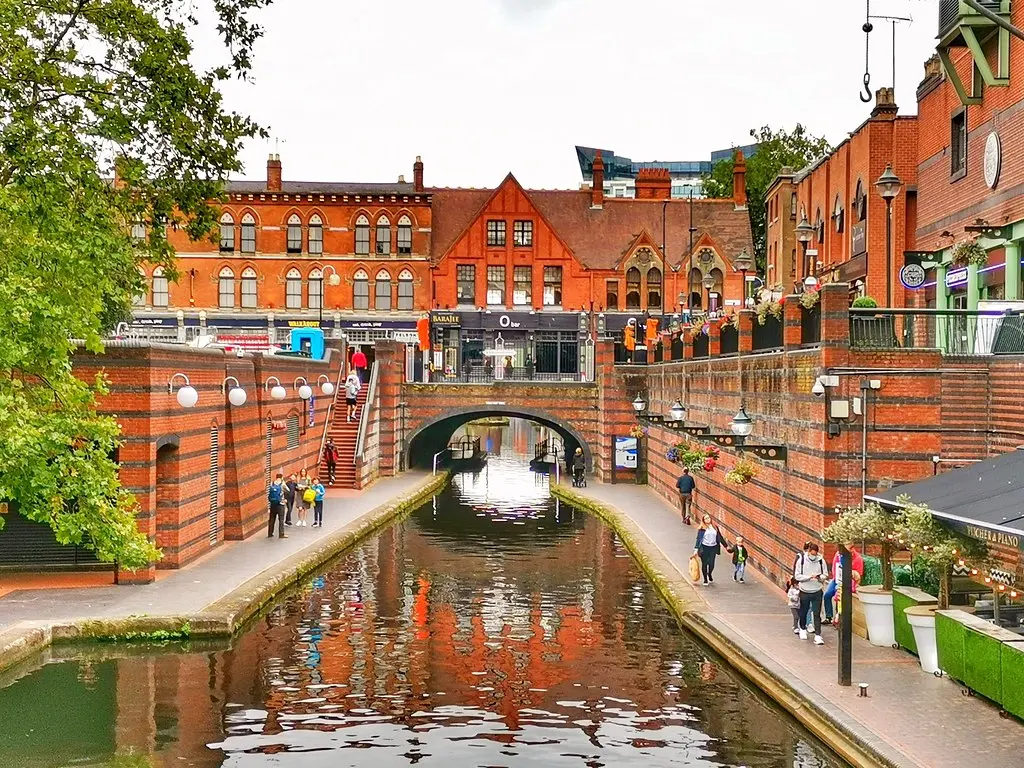
At Birmingham Newman University, you’ll enjoy the best of both worlds: a peaceful, green campus that creates the ideal setting for focused study and personal reflection, yet remains just eight miles from the vibrant city centre. As the UK’s second-largest city, Birmingham is also one of the youngest and most diverse in Europe, offering a dynamic blend of culture, innovation and opportunity. From world-renowned museums and music venues to a thriving food scene alongside a growing business and tech sector, it’s a place where creativity and ambition naturally thrive.

Experience Birmingham: A City Full of Possibilities

Whether you're discovering the Midlands for the first time or already know the area well, Birmingham provides a lively and inclusive environment for students. As one of the most energetic and multicultural cities in the UK, it’s a place where you can grow academically while developing personally. Its rich cultural heritage, creative energy and broad range of opportunities make it an inspiring backdrop for your university journey.

A City That Loves Great Food

Birmingham is a brilliant place to explore diverse culinary experiences. You might wander through the famous Balti Triangle, sample global street food at Digbeth Dining Club or enjoy a relaxed meal by the canals in Brindleyplace. The city is also home to independent cafés, vegan-friendly eateries and countless hidden gems. Whether you're grabbing a quick bite between lectures or planning an evening out, there’s always something new to discover.

Arts, Culture and Entertainment

The city pulses with creativity. You could catch live music at the O2 Academy, experience a world-class performance at the Birmingham Hippodrome or browse exhibitions at the Birmingham Museum and Art Gallery. Creative spaces like the Custard Factory showcase local talent while hosting events that celebrate innovation. With festivals, sporting fixtures and cultural celebrations taking place year-round, there’s never a shortage of things to enjoy.

Simple & Convenient Travel

Getting around Birmingham is straightforward thanks to its well-connected public transport system. Buses, trams and trains make it easy to reach campus, explore the city or travel further afield. Whether you're commuting daily or heading off for a weekend adventure, transport is both accessible and affordable.

Life Beyond the Lecture Hall

Your time at Birmingham Newman University extends far beyond academic study. You’ll have the chance to join student societies, contribute to community projects or try something entirely new. The university’s supportive atmosphere encourages you to build confidence, develop practical skills and feel genuinely at home throughout your studies.

The completion of this qualification enables graduates to demonstrate to potential employers that they have the skills and knowledge expected of a graduate. These skills relate to evidence-based practice.

Students who successfully complete the Top-Up award may apply for the MSc Integrative Counselling and Psychotherapy Studies at Birmingham Newman University.

Courses we think you'll also like
Instagram does not support direct link sharing, below is the page URL to copy to add to Instagram posts manually: